Linda Herd
Featured Artist, November 2026
Hammering with determined intent
While on vacation in Wales this summer, I was fortunate to take a metalsmithing class with Rauni Higson, an award-winning silversmith, in Tal-y-sarn near Caernarfon. We spent the day raising a copper bowl, a skill I have always wanted to learn. Lacking the proper tools in my own studio, I have yet to replicate that project but am hoping to do so soon. Stay tuned!
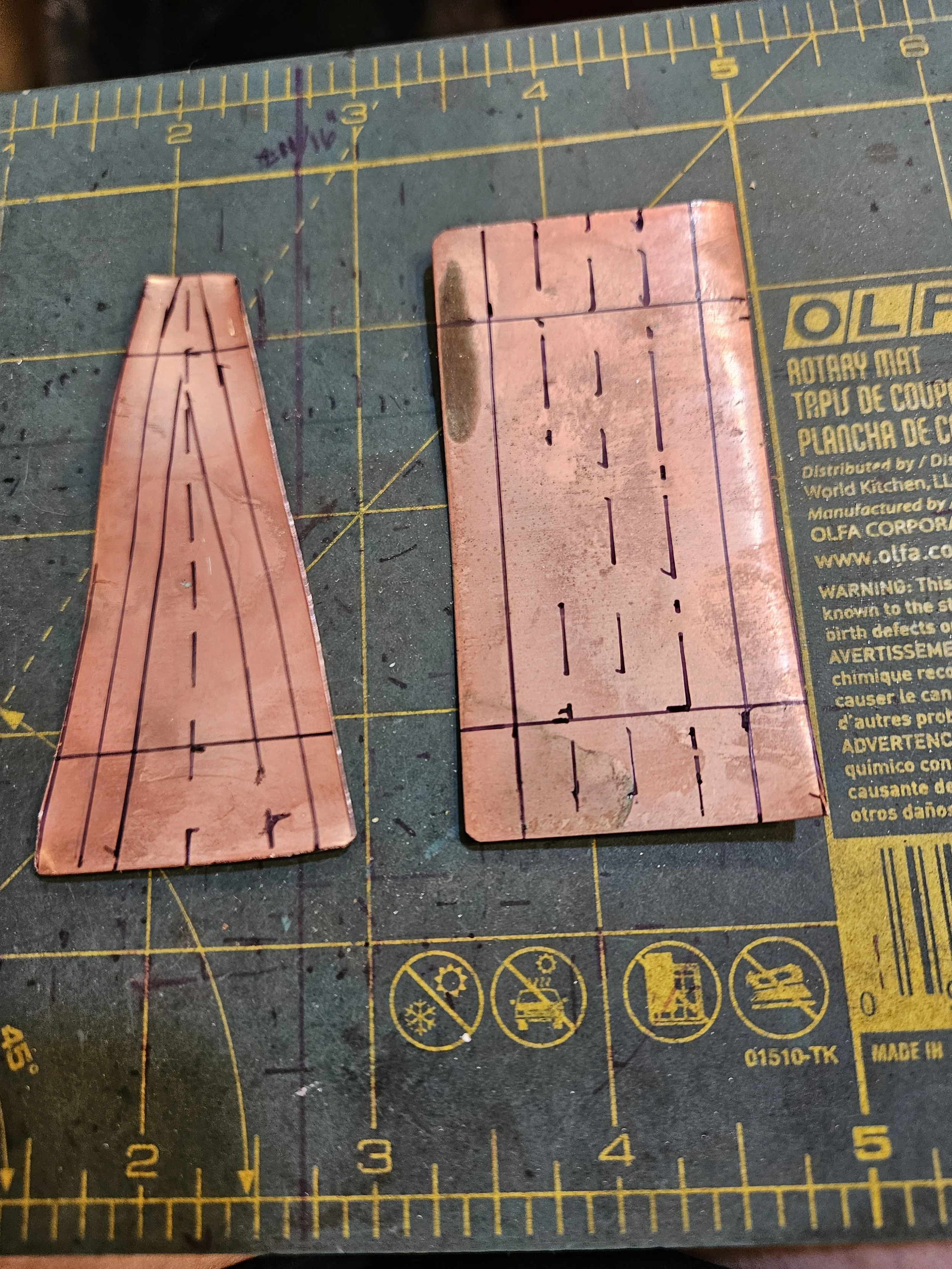
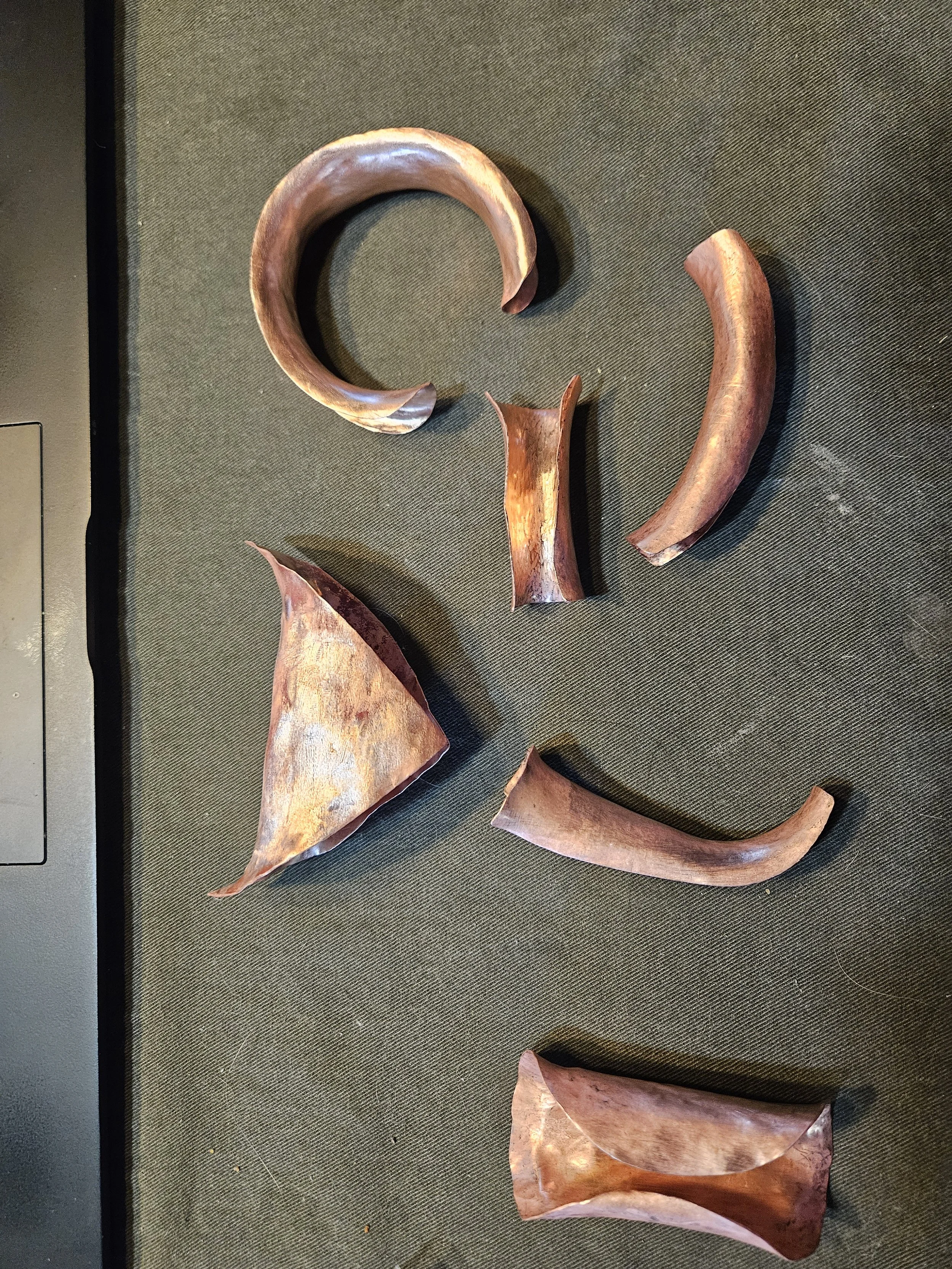
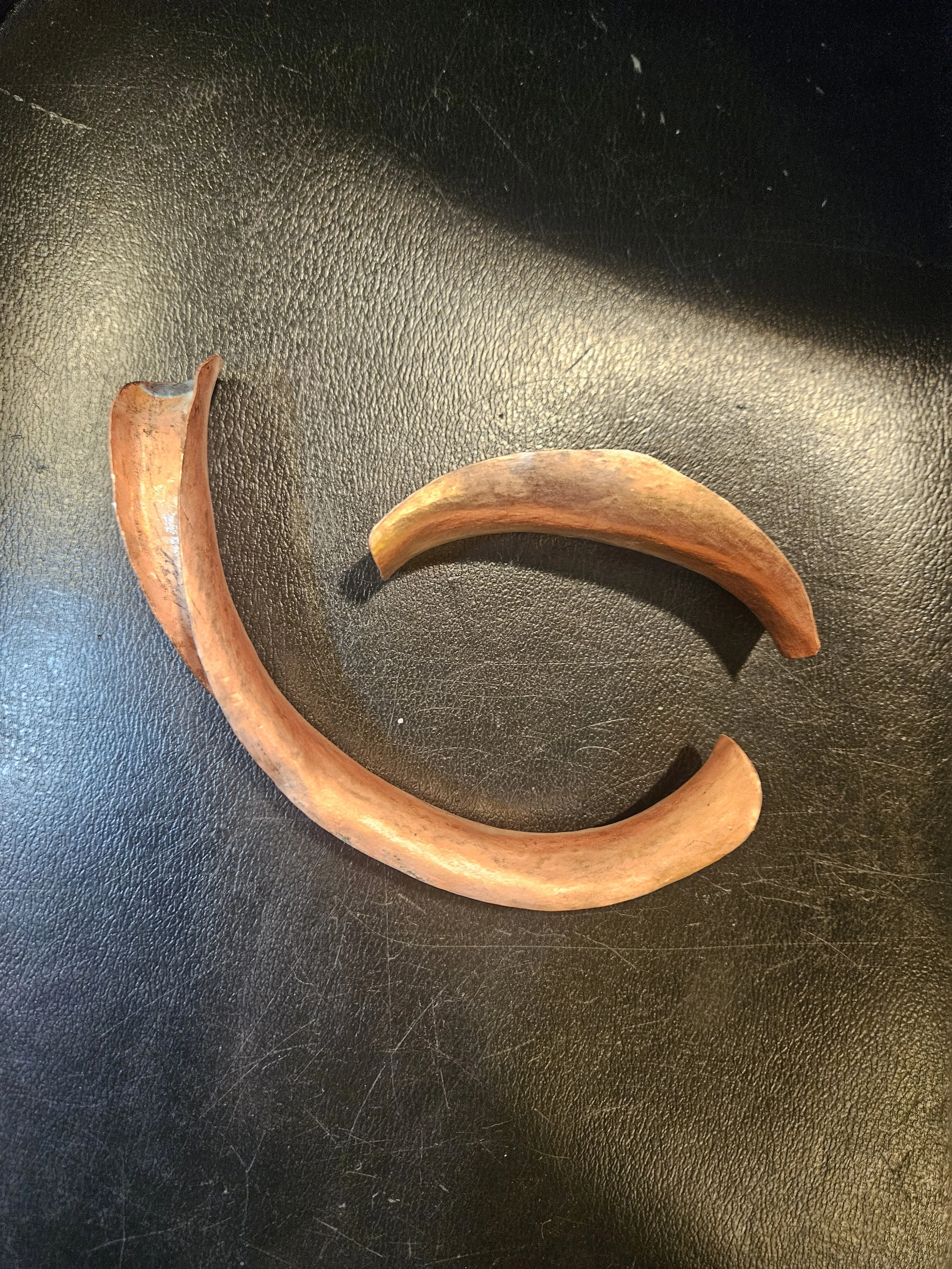
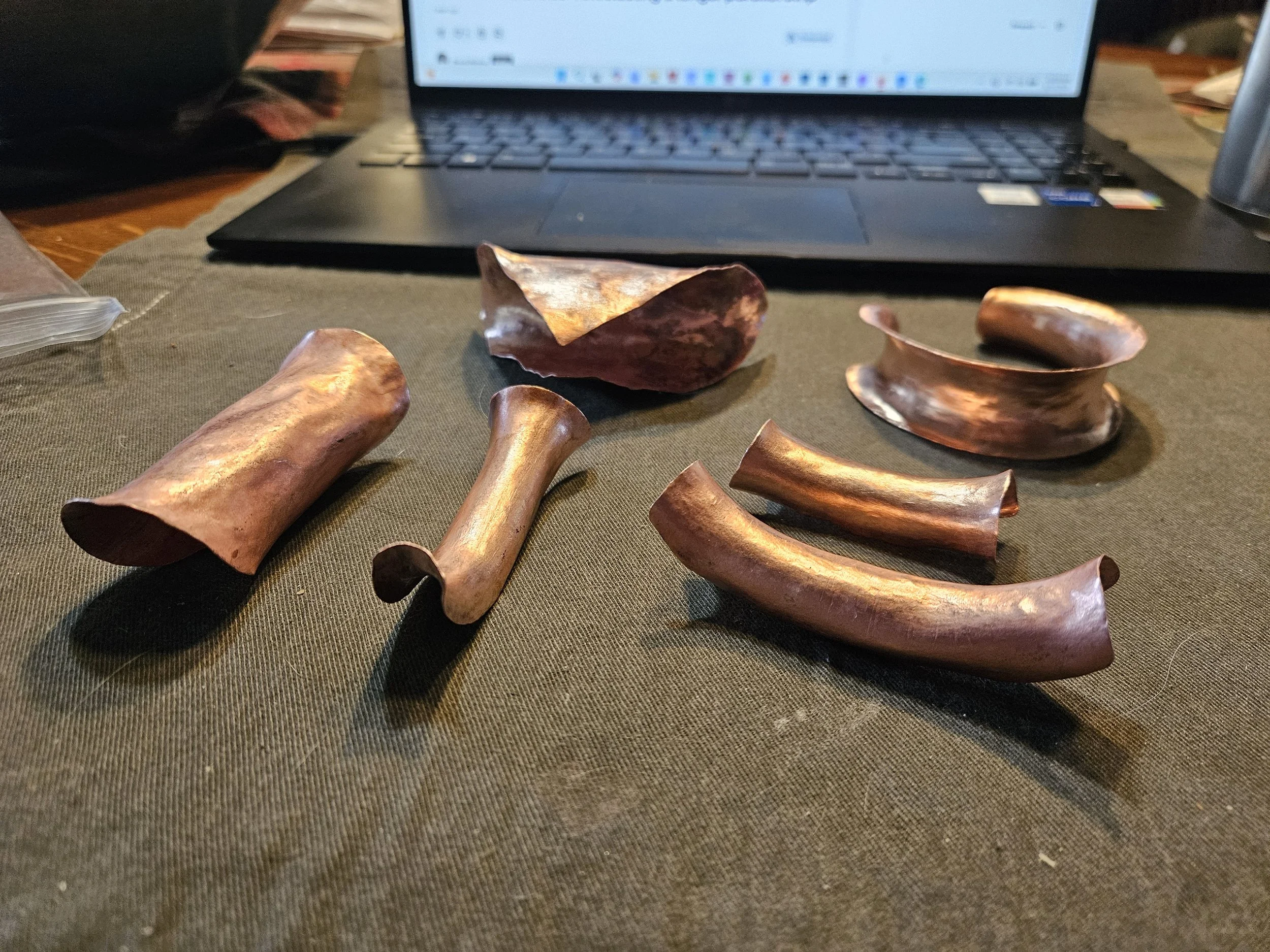
In August 2026, I took a virtual 8-week class with Rauni called “Fundamentals of Anticlastic Forming.” The most recognizable anticlastic forms are saddles and Pringles Potato Chips. These shapes curve in opposing direction in two different planes. This is a process where metal sheet is hammered from the outside edges to the middle, thereby moving the metal to the center of the shape and thickening it. Guidelines are necessary to keep track of the order in which the hammering is done. As the metal moves and the figure begins to curve, it must be annealed (heated to a specific temperature) and guidelines added again. Below are images showing the metal shapes with guidelines and the pieces in progress of being anticlasted.
I will keep practicing this new skill and plan to follow up next year with the next course that takes anticlasting further.
Artists working in metal today are challenged to be creative in materials other than silver, due to the drastic increase in price in the last year. When I began my adventure with metal, silver was approximately $7/ounce. In January 2026, it was over $100/ounce.
My favorite source for copper continues to be Burcham’s Metal Salvage. I source recycled copper and brass sheet and wire there, as well as the occasional aluminum and brass. This way, I keep these metals from ending up in the landfill and leaching into the water table as they oxidize and corrode. It may not be much, but every little bit helps!
Using recycled materials lets me support a local business and make interesting jewelry with a story. Another advantage to using scrap metal is the lower cost. If I buy new sheet metal from a retailer, I pay much more per ounce, including shipping. That cost must be passed on to the buyer, raising the prices of the finished pieces.
All folded up
My passion for fold-forming has not diminished as a way to create jewelry designs. I continue to practice those techniques I’ve learned and do research in acquiring new skills. Folding sheet metal requires frequent annealing, i.e. heating the metal to a high temperature (700°F for copper and 1100-1200°F for silver). Copper and silver are crystalline structures. When annealed, the molecules are moved apart, creating flexibility. Once the metal is work-hardened, either by hammering or folded and hammered flat, the molecules are now tight against one another. This results in the metal being hard or even brittle if over-hardened. Sheet metal is formed by folding and unfolding and often, repeating the process over and over again. Adding texture with a hammer creates a completely new look.
My metalsmithing education has no end in sight. I look forward to the next opportunity to learn more skills.